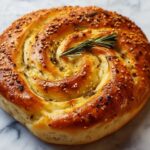
Description
This Rustic No Knead Rosemary Garlic Bread recipe offers an easy way to bake a fragrant, crusty loaf with minimal effort. Infused with fresh rosemary and garlic, the bread requires no kneading and utilizes a long fermentation period to develop flavor and a perfect texture. Baked in a cast iron skillet with a crisp golden crust, it’s an ideal homemade artisan bread for any meal.
Ingredients
Scale
Dry Ingredients
- 3 cups all-purpose flour
- 1 tablespoon finely chopped fresh rosemary (or more, to taste)
- 1 ¼ teaspoons kosher salt
- ¾ teaspoon freshly ground black pepper
- ½ teaspoon instant yeast
Other Ingredients
- 3 cloves garlic, minced
- 1 ½ cups water, at room temperature
- 2 tablespoons cornmeal
Instructions
- Prepare the Dough: In a large bowl, combine the all-purpose flour, minced garlic, finely chopped fresh rosemary, kosher salt, freshly ground black pepper, and instant yeast to create an evenly mixed dry base.
- Mix Wet Ingredients: Add 1 ½ cups of room temperature water to the dry ingredients. Using a wooden spoon or your hand, mix until a wet, sticky dough forms, which should take about 30 seconds.
- Initial Fermentation: Cover the bowl tightly with plastic wrap and leave it at room temperature. Allow the dough to ferment until the surface is dotted with bubbles, approximately 18 to 24 hours, which helps develop flavor and gluten structure.
- Prepare the Baking Vessel: Lightly oil a 10-inch cast iron skillet or spray it with nonstick spray. Then sprinkle the skillet with cornmeal to prevent sticking and add a rustic texture to the bread’s crust.
- Shape the Dough: On a lightly floured surface, gently shape the dough into a round ball without deflating it entirely, preserving the air bubbles for a light crumb.
- Proof the Dough: Place the shaped dough into the prepared skillet. Cover it with a clean dishtowel and let it stand at room temperature until the dough doubles in size and does not spring back easily when poked with a finger, about 2 hours.
- Preheat the Oven: Set your oven to 450°F (232°C) and allow it to come to temperature fully before baking to ensure proper crust development.
- Bake the Bread: Place the skillet with the proofed dough into the preheated oven. Bake until the bread is a golden brown color, approximately 30 to 40 minutes. Remove from oven and cool before slicing.
Notes
- Long fermentation is key to flavor and texture; do not rush the initial 18-24 hour fermentation.
- Use a cast iron skillet or a heavy oven-safe pan to mimic a bread oven environment and create a crispy crust.
- If you prefer, you can substitute fresh rosemary with dried rosemary, but reduce the amount slightly as dried herbs are more concentrated.
- Allow bread to cool completely before slicing to avoid a gummy texture.
- Store leftover bread in a paper bag for up to 2 days or freeze for longer storage.