Description
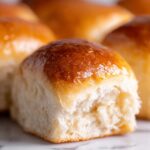
These One Hour Quick Dinner Rolls are soft, tender, and perfect for a fast homemade bread fix. Using active dry yeast and a quick rising method, you can have fresh, golden dinner rolls ready in just about an hour, making them ideal for last-minute dinners or special occasions.
Ingredients
Scale
Yeast Mixture
- 3 tablespoons warm water (105-110°F)
- 1 tablespoon active dry yeast
- 1 teaspoon sugar (to activate yeast)
Dough
- 3 tablespoons sugar
- 1 teaspoon kosher salt
- 3 tablespoons shortening
- 3/4 cup warm milk (105-110°F)
- 1 large egg
- 2 1/2 cups all-purpose flour (spooned and leveled)
For Pan & Finishing
- 1 tablespoon butter (to grease pan)
- 1 tablespoon butter (to brush on finished rolls)
Instructions
- Proof the yeast: In a small bowl or coffee mug, add 3 tablespoons warm water (lukewarm, 105-110°F). Stir in 1 tablespoon active dry yeast and 1 teaspoon sugar. Let sit for 5 minutes until the yeast dissolves and bubbles appear.
- Make the dough base: In a large bowl or stand mixer, combine 3 tablespoons sugar, 1 teaspoon kosher salt, 3 tablespoons shortening, and 1 cup of the flour.
- Add warm milk: Warm 3/4 cup milk in the microwave in 30-second increments until warm but not hot (105-110°F). Add to the flour mixture and stir or beat with a paddle attachment until combined.
- Incorporate yeast: Add the bubbly yeast mixture to the flour mixture and mix well.
- Add egg: Beat in 1 large egg thoroughly until combined.
- Add remaining flour: Gradually add remaining flour in increments, mixing between additions, until dough is smooth, soft, and slightly sticky but not pulling away completely from bowl sides. Use judgment to avoid over-flouring.
- Knead the dough: Using dough hook in a stand mixer, knead for 5 minutes; if kneading by hand, do so on a floured surface for about 8 minutes. Dough will still be sticky.
- Rest dough: Scrape dough onto a floured work surface, shape into a ball, and cover with a clean tea towel. Let rest for 5-10 minutes.
- Prepare pan: Preheat oven to 375°F for 2-3 minutes. Add 1 tablespoon butter to a 10-inch cast iron skillet or 9×13 inch baking pan and place in oven until butter melts and pan is hot. Turn oven off. Using a pastry brush, swirl butter to coat entire interior including sides. Keep pan in warm oven until ready.
- Shape rolls: Deflate dough by pressing down, remove air bubbles, and divide into 12 equal pieces (~2 oz each). Shape each piece by rounding one side and pinching the opposite side. Place shaped rolls pinched-side down in hot buttered pan with space between.
- First rise: Cover rolls with a tea towel and place in the turned-off oven. If oven rack is warm but not hot enough to burn finger, close oven door; if too hot, leave door slightly open to cool. Let rise 15 minutes.
- Continue rising: Remove rolls from oven, keep covered, and let continue rising in a warm place for another 10-15 minutes while preheating oven back to 375°F. Rolls should double in size, total rise time about 25 minutes.
- Bake rolls: Remove towel and bake rolls at 375°F for about 12 minutes until tops are deep golden brown. Internal temperature should reach at least 190°F.
- Butter the rolls: Immediately after baking, brush 1 tablespoon melted butter over the tops using a pastry brush.
- Rest and serve: Let rolls cool for about 5 minutes before serving. Enjoy warm with plenty of butter or cinnamon honey butter for extra indulgence.
Notes
- Warm liquids should be between 105-110°F to activate yeast without killing it.
- Use a stand mixer with a dough hook for easier kneading, or knead by hand on a floured surface if preferred.
- Don’t over-flour the dough; slightly sticky dough produces softer rolls.
- Butter the pan thoroughly to prevent sticking and add flavor.
- Ensure rolls rise in a warm but not hot oven to prevent premature baking.
- Check internal temperature of rolls with a thermometer to confirm doneness.
- Rolls are best enjoyed fresh but can be stored in an airtight container for 1-2 days.